Collection Inspiration: Frogs
Posted on 3/24/2026
Not only was March 20 the first day of spring, it was also World Frog Day! This is a great time to celebrate frogs and their crucial role in our environment. Though they may be unassuming, frogs are essential to pest control and environmental preservation. However, more than a third of all frog and toad species are either endangered or extinct due to a variety of factors. To bring awareness to the many challenges frogs face and to celebrate World Frog Day, check out these 10 banknotes featuring the frog species from around the world.
10 Banknotes Featuring Frogs
Montane Hourglass Tree Frog
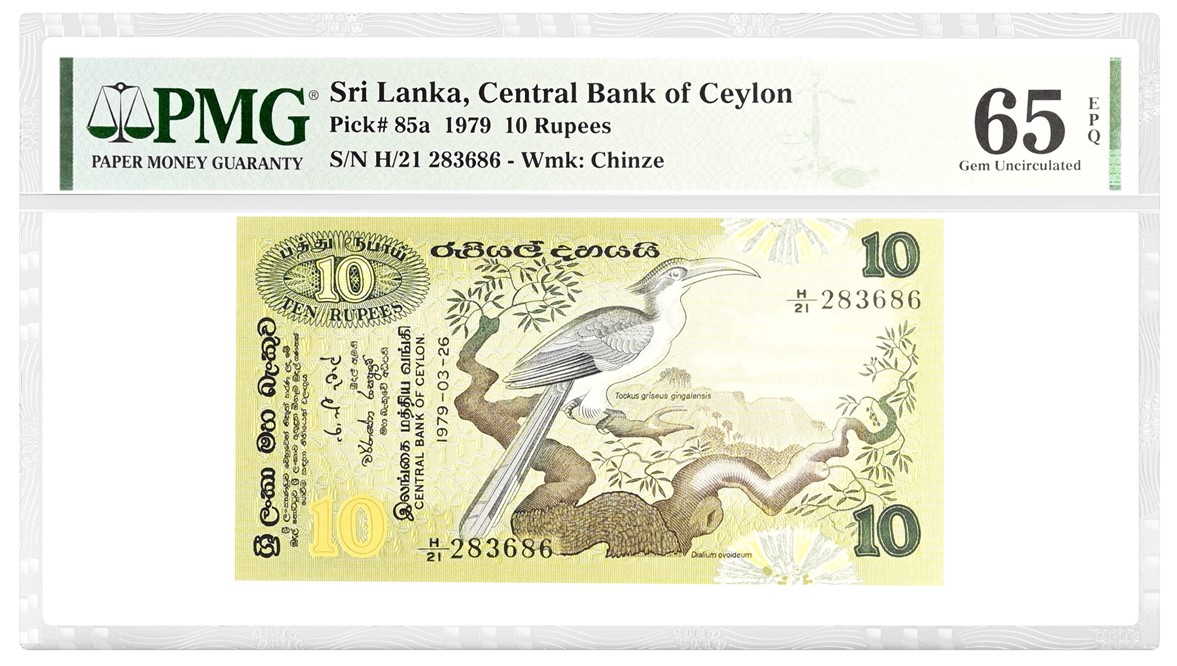
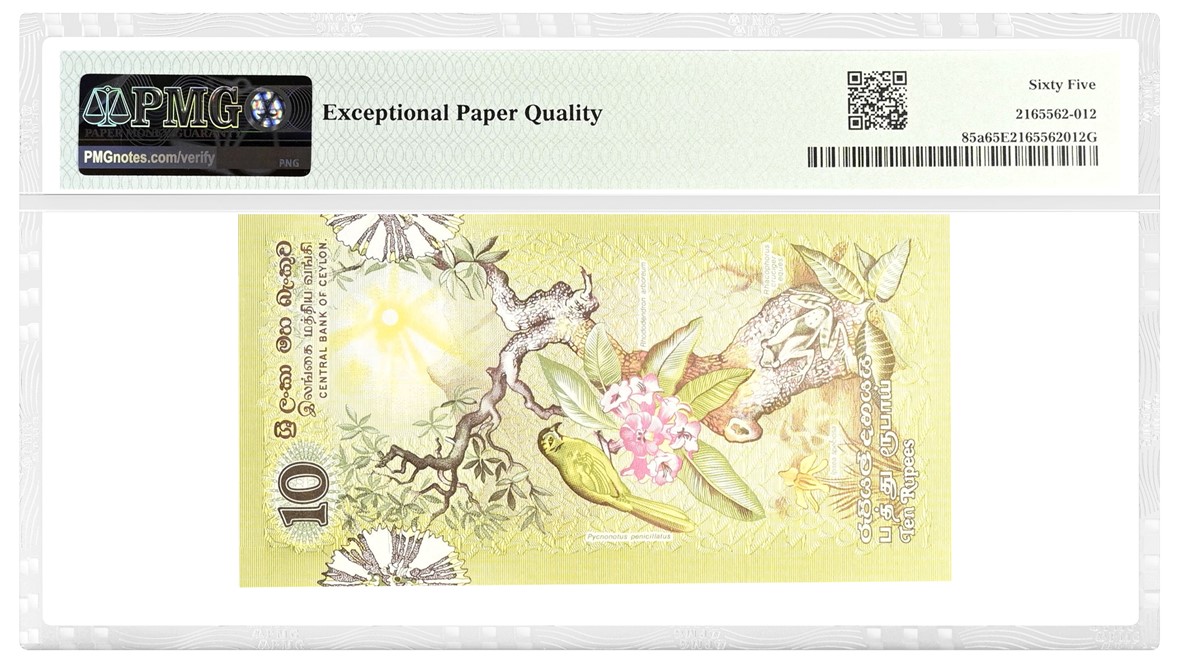
Camouflaged on the back of this Sri Lanka 10 Rupees note is a Montane hourglass tree frog from the Rhacophoridae family. Scientifically known as the taruga eques, these tree frogs are native to the central hills of Sri Lanka and thrive in forested areas that have little to no human interference. Unfortunately, they are considered endangered due to habitat loss.
 |
|
 |
|
| Click images to enlarge. | |
Colombian Four-eyed Frog
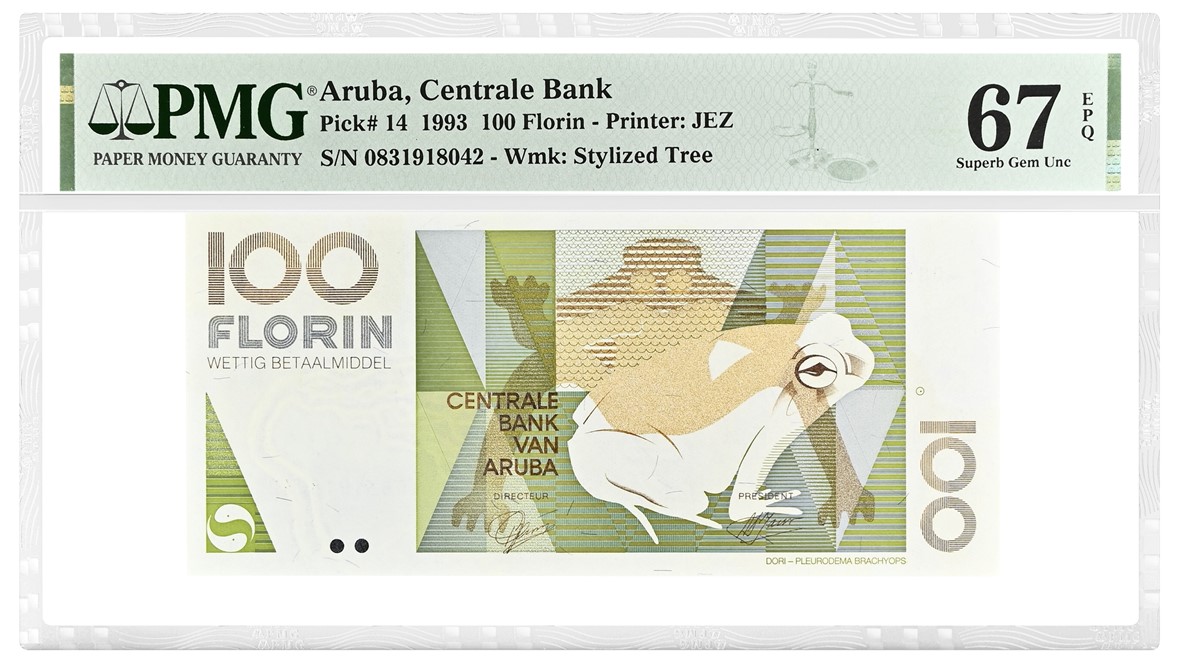
The Colombian four-eyed frog pictured on this Aruba 1993 100 Florin note is found throughout northern Brazil and Venezuela. Although the frog does not have four eyes (as its name implies), the two poisonous glands on its posterior resemble eyes. When threatened, the Colombian four-eyed frog will lower its head and raise its behind to look more threatening while also exposing the poisonous glands to predators.
 |
|
 |
|
| Click images to enlarge. | |
Muiraquitã
This Brazil 1993 500,000 Cruzeiros features a portrait of Mário Raul de Morais Andrade — a famous Brazilian poet and novelist — and a Muiraquitã to his right. Muiraquitã are small, decorative statues made to resemble animals; in this case, a frog. Tapajos women believed the frog-shaped stone could help prevent disease and avoid infertility. Their popularity eventually spread through to the Caribbean and into Brazil and beyond. Macanaima, a well-known library work by Andrade, features a muiraquitã.
 |
|
 |
|
| Click images to enlarge. | |
Colombian Frog
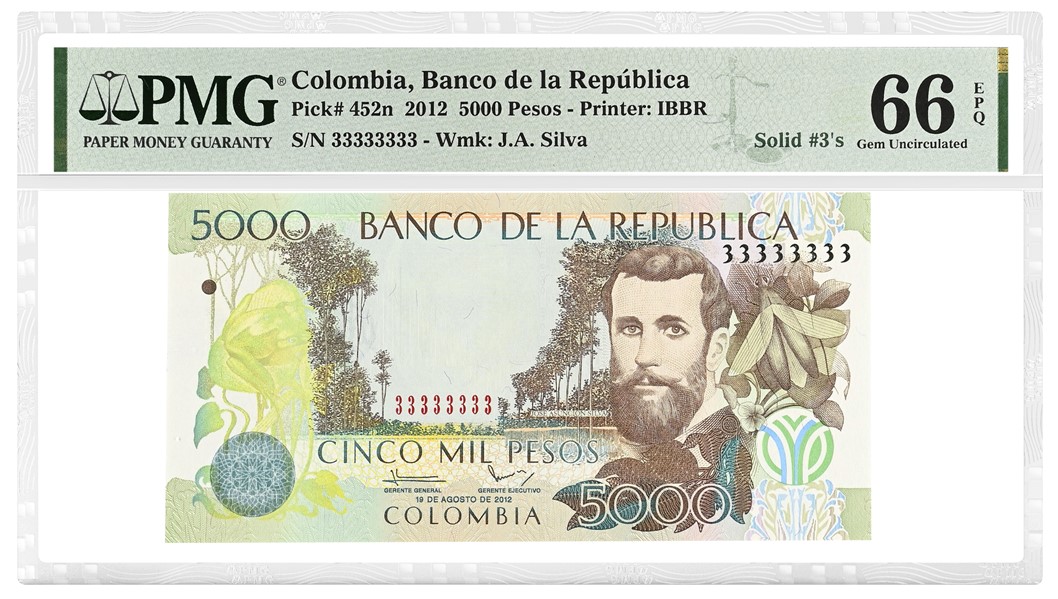
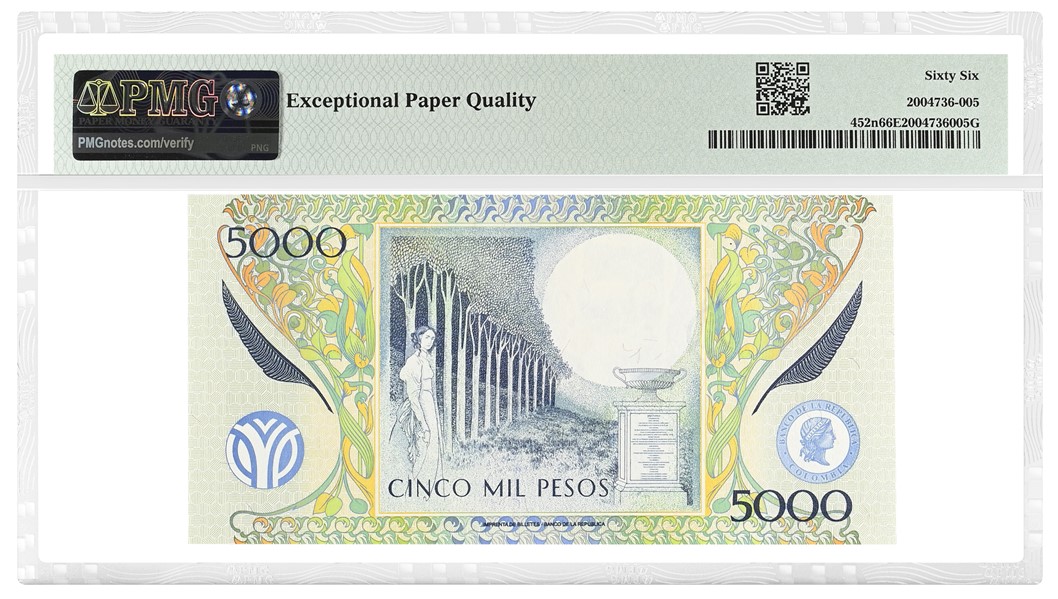
The front of this Colombia 5,000 Pesos features a frog cleverly hidden in the foliage on the left side of the note. The frog’s body shape and size are similar to the diasporus citrinobapheus, or the yellow dyer rainfrog. A recently identified species, the yellow dyer was first discovered in 2012 and is native to Panama, near the Colombian border.
 |
|
 |
|
| Click images to enlarge. | |
Common Coquí
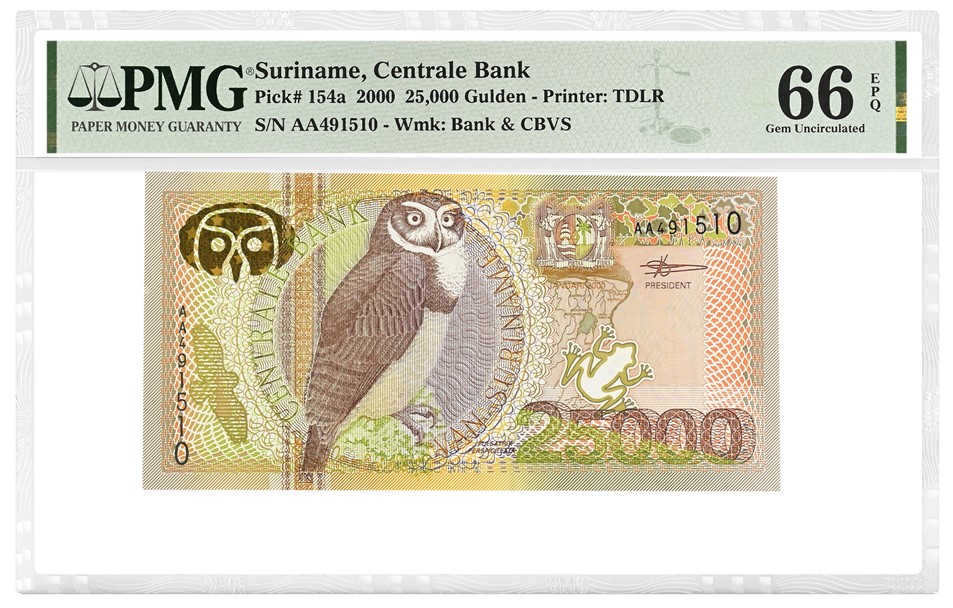
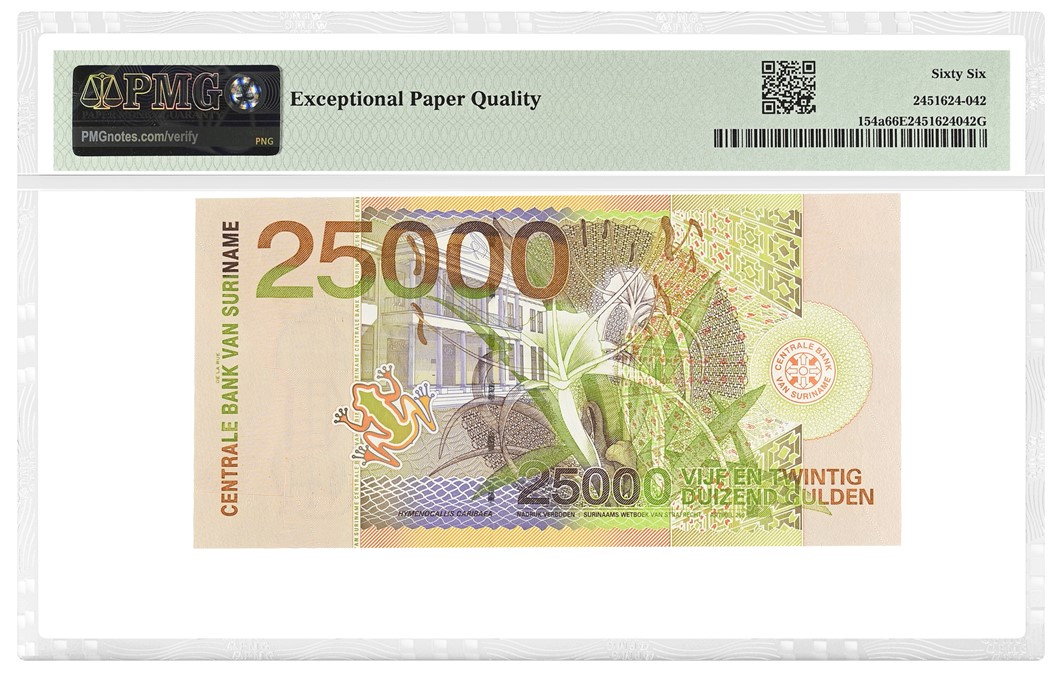
These tiny frogs are about the size of a Half Dollar! The common coquí is native to Puerto Rico — specifically the islands of Vieques and Culebra — but they have become invasive in Colombia, Hawaii and the Virgin Islands. The name “coquí” comes from the frogs’ distinct calling sounds. The “co” repels other males, while the “quí” attracts females. Although invasive in some places, the common coquí is a significant symbol in Puerto Rican culture.
 |
|
 |
|
| Click images to enlarge. | |
Barbados Whistling Frog
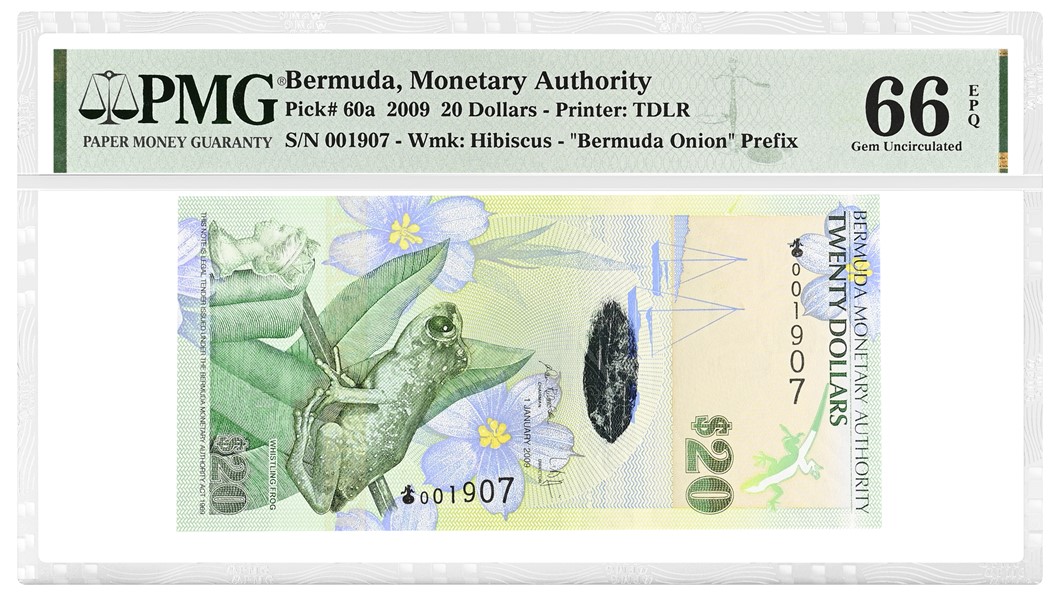
Similar in size to the common coquí, Barbados whistling frogs are tiny noisemakers whose chirps can be heard for miles across Bermuda, Barbados and Grenada. Visitors will find these whistling frogs just about anywhere — the tiny suction cups on their feet allow them to climb up a variety of surfaces, even glass — though they are not yet found on Bermuda’s smaller islands. These whistling frogs can be helpful in the garden in their native lands, since they eat a variety of pests that would destroy plants.
 |
|
 |
|
| Click images to enlarge. | |
São Tomé Giant Reed Frog
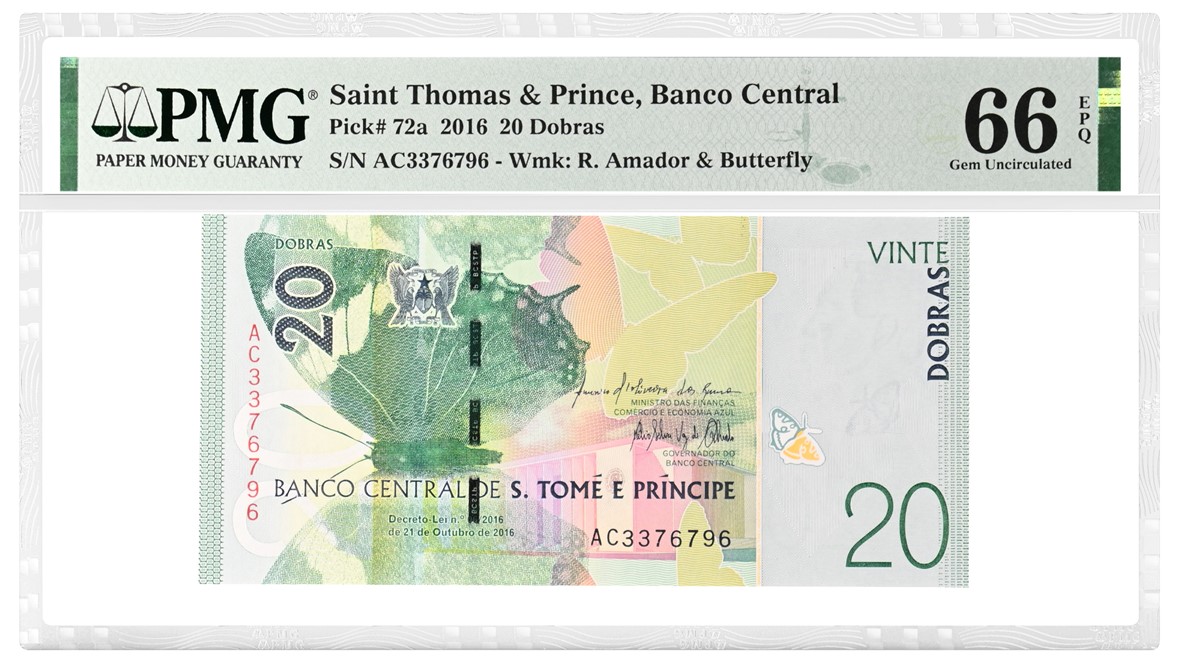
The spotted frog on the reverse of this Saint Thomas and Prince 2016 20 Dobras note is a hyperolius thomensis, more commonly known as the São Tomé giant reed frog. Although they are the largest species of reed frog, the giant reed frog can be difficult to spot because they live in the branches of massive rainforest trees. Unfortunately, the São Tomé giant tree frog is now endangered because much of their natural habitat has been cut down.
 |
|
 |
|
| Click images to enlarge. | |
Seychelles Tree Frog
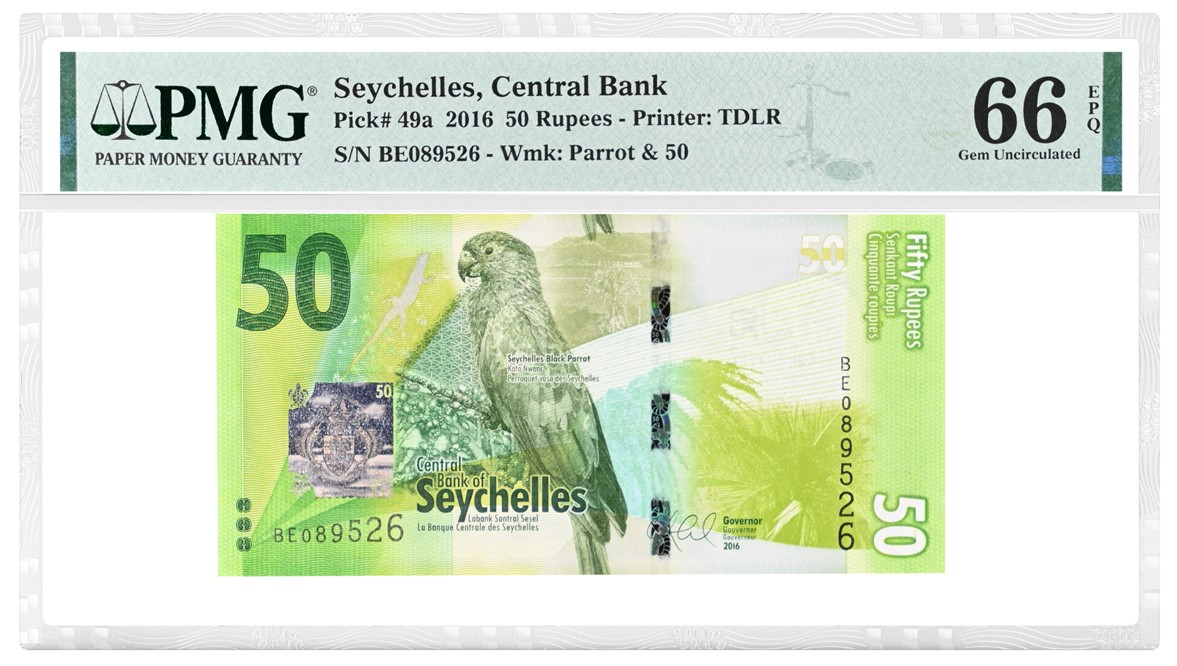
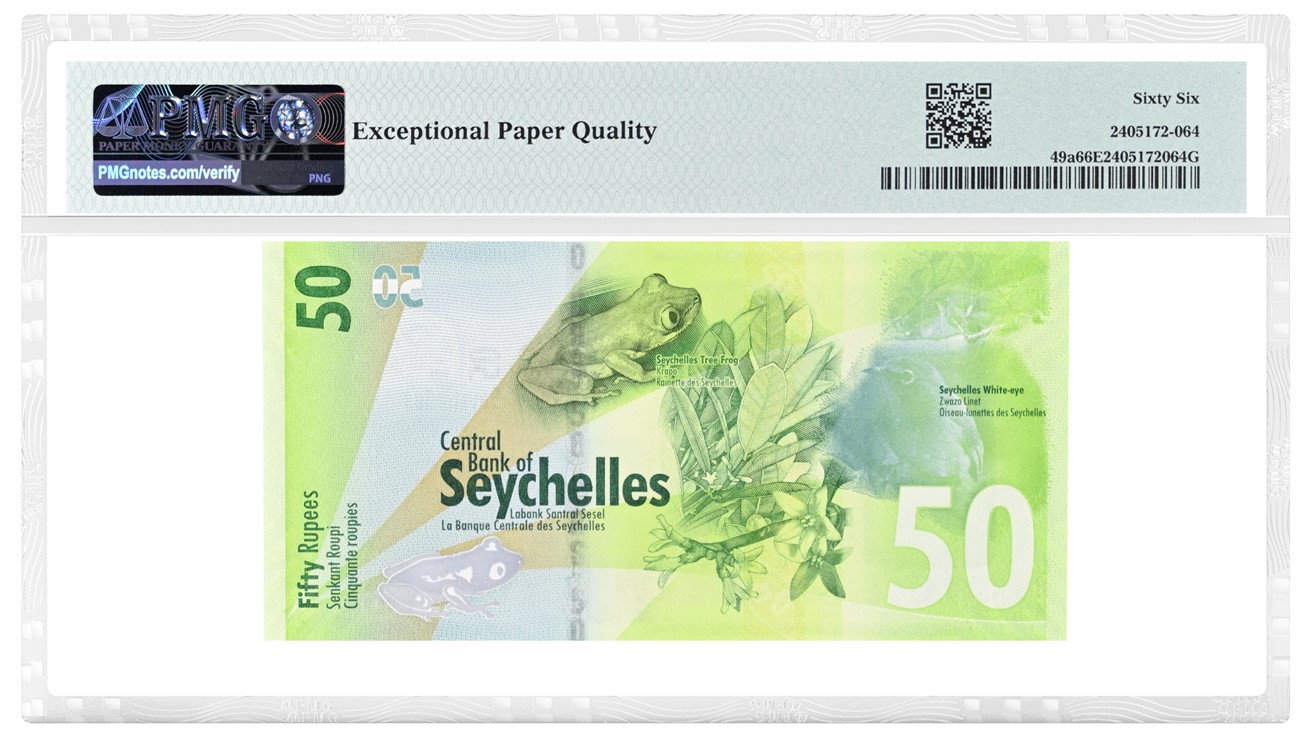
Seychelles is home to a variety of frog species, including the Seychelles treefrog, which is shown on the back of this Seychelles 2016 50 Rupees note. The frogs are native to the islands of Mahe, La Digue, Silhouette and Praslin, and the coloration they are found in changes based on the island where they reside. These large tree frogs are nocturnal and frequent the trees and waters of the rainforests.
 |
|
 |
|
| Click images to enlarge. | |
Madagascar Poison Frog
The more colorful a frog is, the more likely it is to be poisonous. The Madagascar poison frog is no exception — they come in a variety of color patterns. Their bright colors serve as a warning to predators, and any predator foolish enough to ignore these warnings will be met with a high dose of alkaloid toxins that the frogs secrete on their skin. This poison frog’s colorful body of blacks, greens and yellows is beautifully depicted on this Madagascar ND (2017) 100 Ariary note.
 |
|
 |
|
| Click images to enlarge. | |
Rancho Grande Harlequin Frog
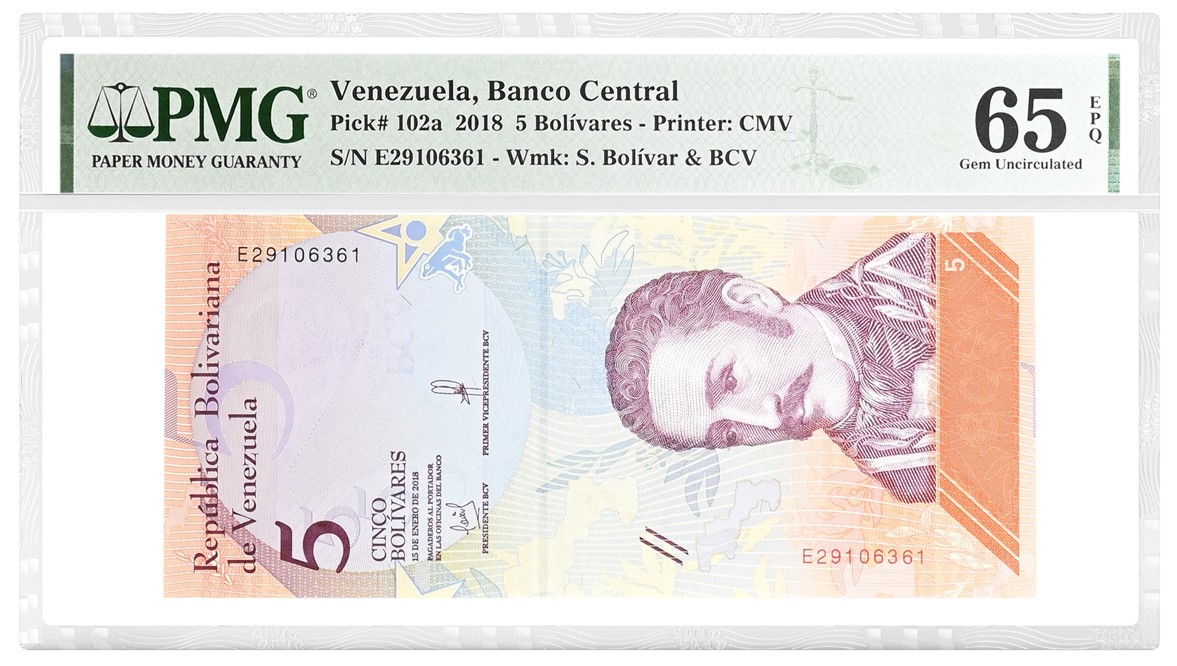
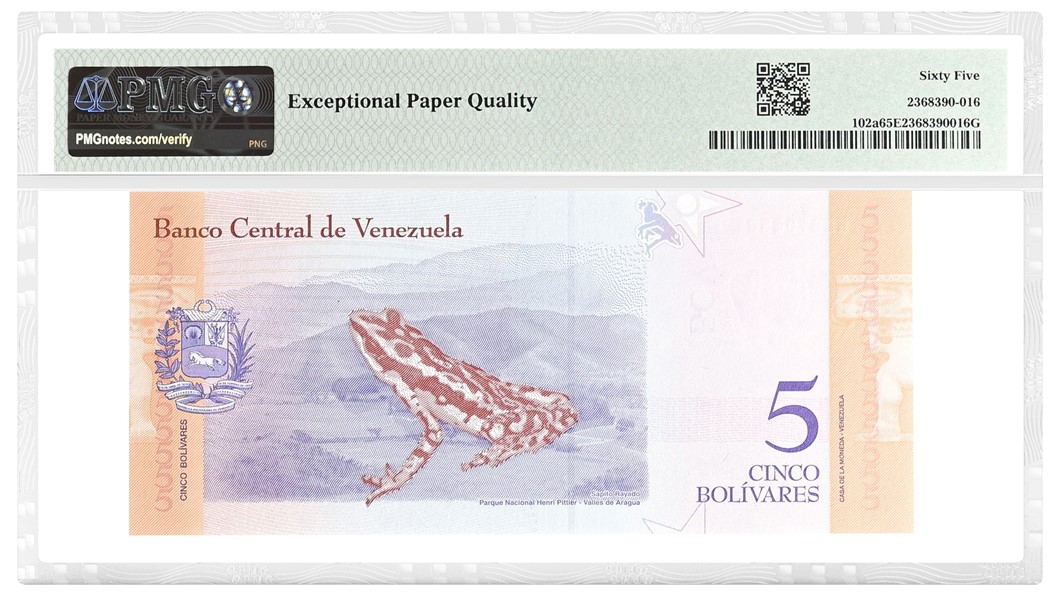
The back of this Venezuela 2018 5 Bolivares note depicts a Rancho Grande harlequin frog superimposed on a rock formation. Although these frogs were historically abundant across Venezuela, they disappeared and were thought to be extinct after 1986. They were rediscovered in 2003 but remain critically endangered. They are mainly threatened by an infectious disease called Chytridiomycosis, which affects amphibians’ ability to breathe, eat and absorb nutrients.
 |
|
 |
|
| Click images to enlarge. | |
If you're interested in more inspiring banknotes, check out our other Collection Inspiration columns for more collecting ideas, including ones centered on lizards and insects. Also, be sure to follow PMG on Facebook, on Instagram and on Twitter for other articles and interesting notes posted daily.
Stay Informed
Want news like this delivered to your inbox once a month? Subscribe to the free PMG eNewsletter today!