Counterfeit Detection: Iraq 1931 (1935) 1/4 Dinar
Posted on 10/20/2026
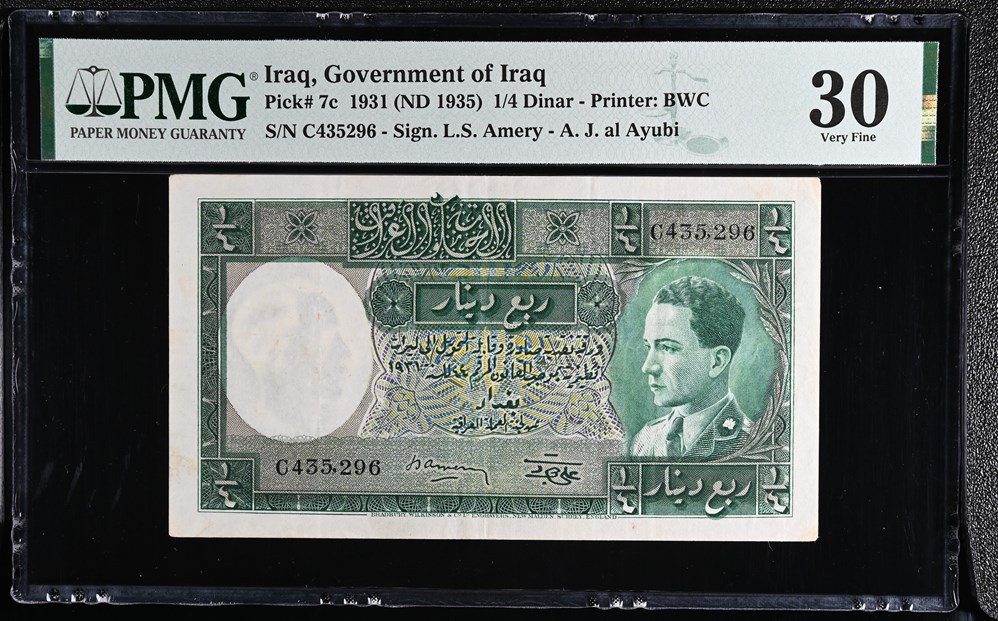
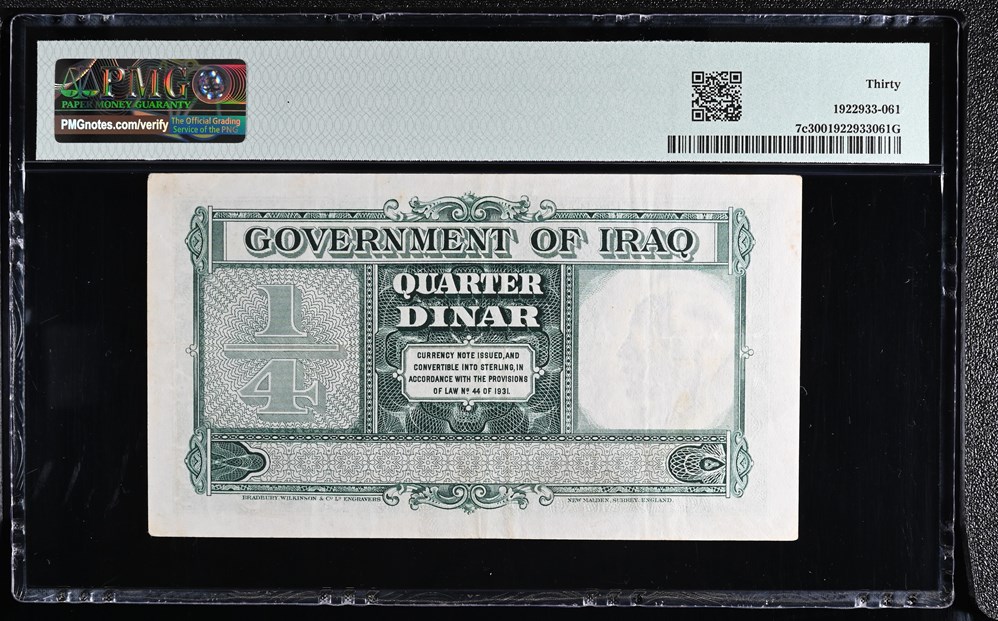
Iraq introduced banknotes in the 1930s, with denominations ranging from 1/4 Dinar to 100 Dinars. All Iraqi banknotes of this era are highly collectible, including the 1931 (1934) 1/4 Dinar, which is cataloged as Pick# 7. It shows King Ghazi, who ruled from 1933 until 1939, when he died in a car crash at age 27.
 |
|
 | |
| Click images to enlarge. | |
The PMG Population Report lists five issued varieties, including Pick# 7c, which is represented by 23 examples and is distinguished by its Amery/al Ayubi signature combination. Time has taken its toll on this issue: The median grade for Pick# 7c is PMG Very Fine 25, and there are no Uncirculated examples listed in the PMG Population Report. Even in average condition, these notes are generally worth several hundred dollars or more.
 |
|
 | |
| Click images to enlarge. | |
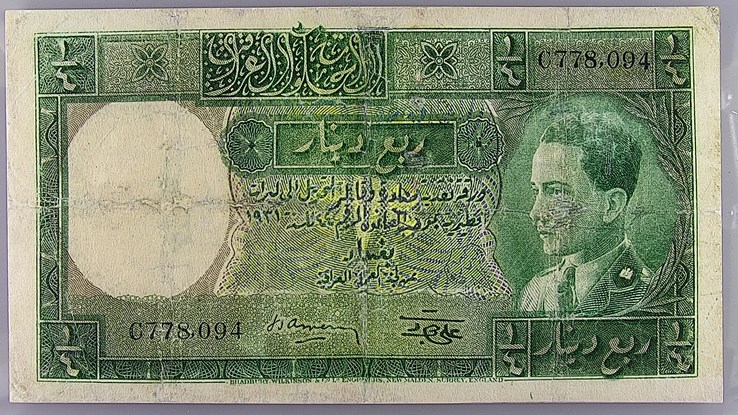
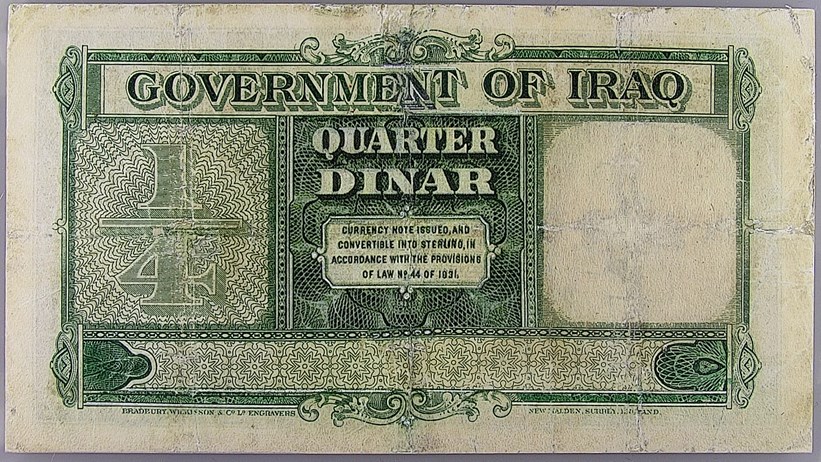
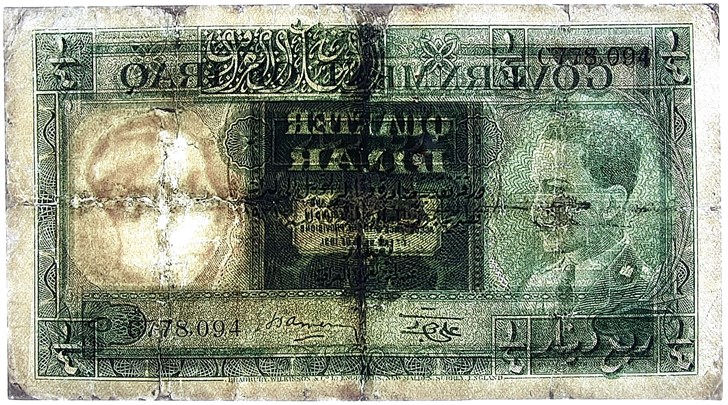
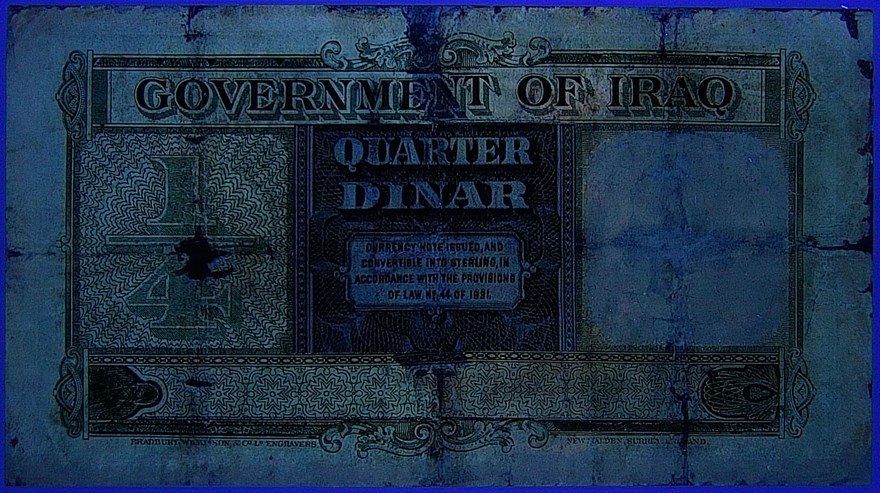
PMG recently received an example of Pick# 7c in a submission. Extensive attempts at restoration are evident under special lighting, which can be seen in the images below. A large piece in the king’s face was added, which can also be seen under ultraviolet lighting on the back of the note as a black splotch over the denomination 1/4. Restoration efforts alone do not preclude certification, but they do require close examination by the PMG grading team.
 |
|
 | |
| Click images to enlarge. | |
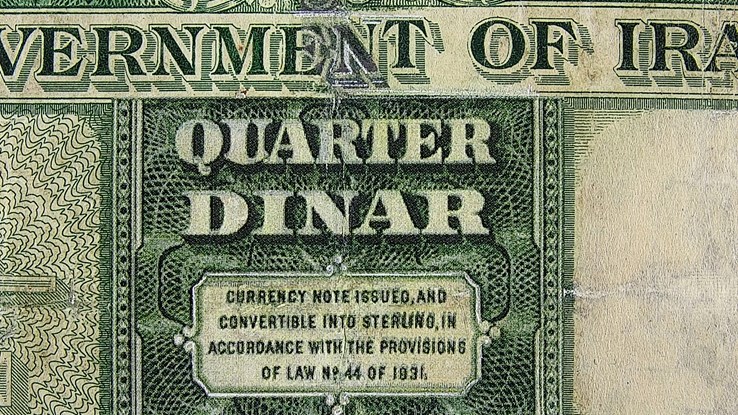
Unfortunately for the submitter of this note, the restoration efforts left a lot to be desired. In the image below, take a close look at the ‘N’ in GOVERNMENT. The engraved printing around the ‘N’ has been reproduced with an inkjet printer, but the details and color do not reflect what is found on an original note. The lines underneath the ‘N’ are particularly egregious.
 |
|
| Click image to enlarge. | |
The image above also reveals that this note was torn down the middle at some point. Notice how much higher the ‘T’ — and the vertical line above the T — are when compared to the corresponding elements to the left. The tear occurred at the ‘N’ in GOVERNMENT and it continued down through the ‘R’ in QUARTER, the ‘N’ in DINAR, and the text beneath it about the currency law.
 |
|
| Click image to enlarge. | |
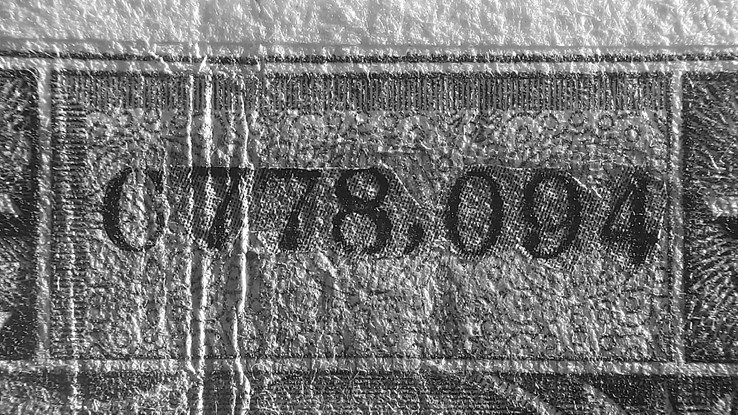
An examination of the serial number on the right side of the note reveals just how far the restoration attempt went. Notice the dots around the numbers? That indicates this area was created with an inkjet printer, which produces various degrees of shading by altering the frequency and diameter of the dots.
There is also a thin white line above the "778," which then dips sharply and then rises again over the "094." The dots stop abruptly at this line. This establishes that these numbers (which were printed using modern technology) were actually spliced into the vintage note. This note was not merely severed and re-attached. Its right half is from an entirely different note, which then had its serial number altered!
Genuine vintage Iraqi notes can be an important part of a collection of Middle East currency, but collectors would be wise to seek third-party certification. Remember, PMG backs its determinations of authenticity and grade with the PMG Guarantee.
Stay Informed
Want news like this delivered to your inbox once a month? Subscribe to the free PMG eNewsletter today!
There is never any charge to contact us. To reach a customer service representative, call, text or WhatsApp (+1) 855-472-3310 or use this form.