Counterfeit Detection: Hong Kong 10 Dollars – Raised
Posted on 3/24/2026
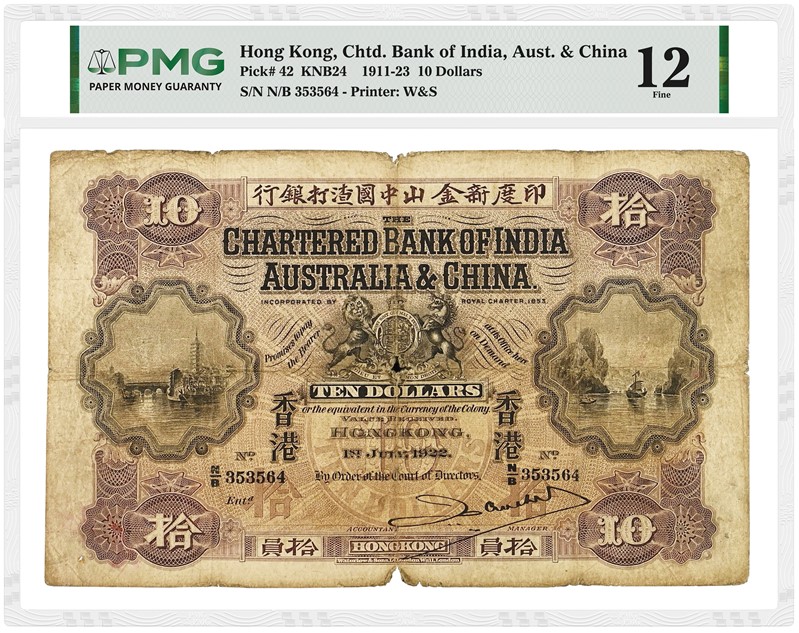
Vintage Hong Kong banknotes have a strong numismatic following thanks to their history, beauty and rarity. The Hong Kong, Chartered Bank of India, Australia and China 1911-23 10 Dollars (with the catalog number of Pick# 42) has 36 issued examples in the PMG Population Report. The example shown below, which is among the lowest graded of those, realized $4,320 in a Heritage Auctions sale in June 2024, demonstrating the strong demand.
 | |
 | |
| Genuine Hong Kong Pick# 42 Click images to enlarge. |
|
Paper money counterfeiters can take two approaches to their nefarious craft: Create an entirely new note, which requires the talent and technology to engrave plates, or attempt to make small changes to an existing note, taking advantage of the work done by the issuer to use the correct paper, ink and meticulous details of the design. One way this is done is to change the denomination of a genuine note to one that is considerably higher, creating what is called a “Raised” note.
 | |
 | |
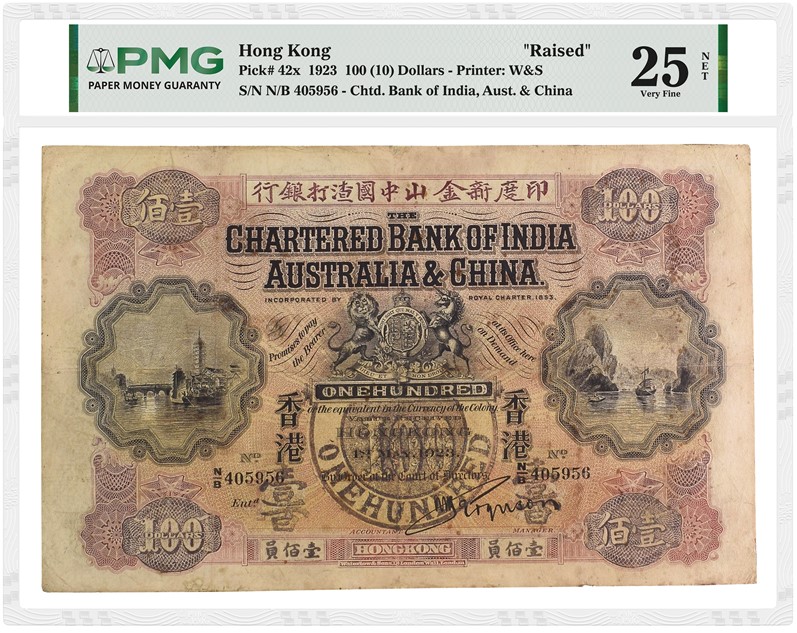
| Raised Hong Kong Pick# 42 Click images to enlarge. |
|
Featured in an April 2026 Stack’s Bowers Galleries auction is a Raised example of Hong Kong Pick# 42, in which a counterfeiter attempted to change the denomination from 10 Dollars to 100 Dollars. This took quite a bit of effort, because the denomination appears repeatedly on both the front and back of the note.
 | |
 |
|
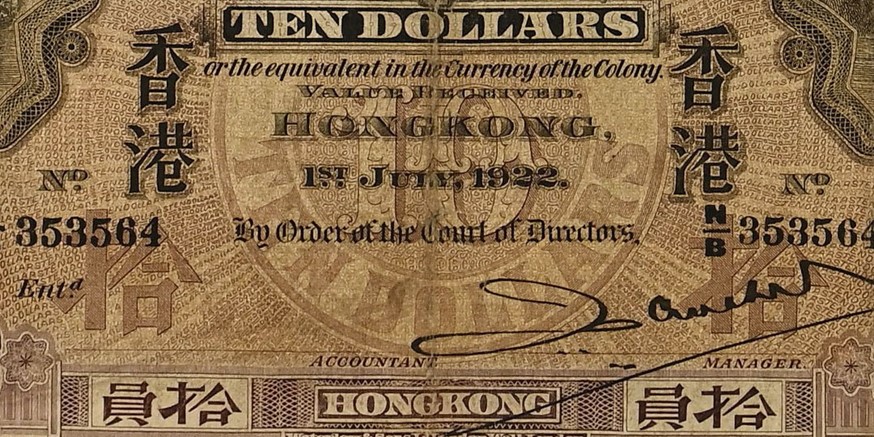
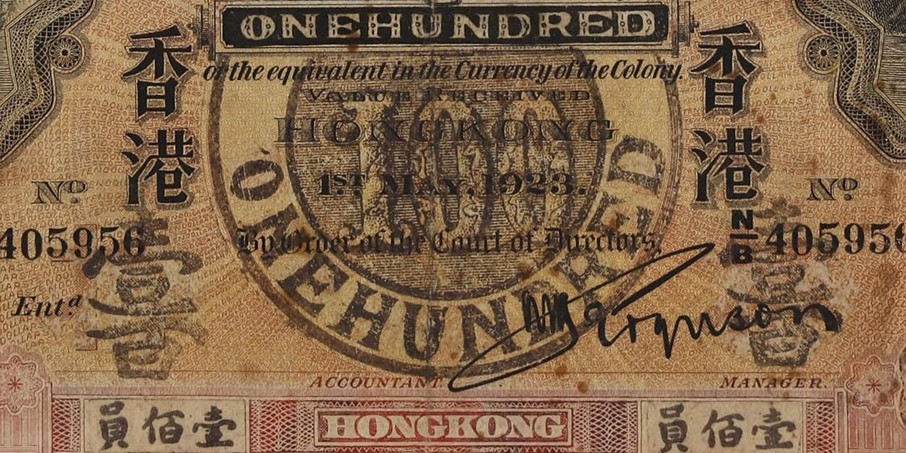
| Close-ups of the fronts of the genuine note (top) and Raised note. Click images to enlarge. |
|
As seen in the image above, the character 拾 (used to denote a denomination of 10) appears behind each serial number on the genuine as well as flanking the word Hong Kong at the bottom. This was altered on the counterfeit, but the updated characters lack the elegance of the original.
Similarly, the English was changed from TEN DOLLARS to ONE HUNDRED in two places, and the number they surround was also changed from 10 to 100. However, the counterfeiter was unable to alter the microprinting radiating out from the center that repeats the word TEN DOLLARS. Banknote printers have adopted many anti-counterfeiting methods in order to make it extremely difficult to create a Raised note.
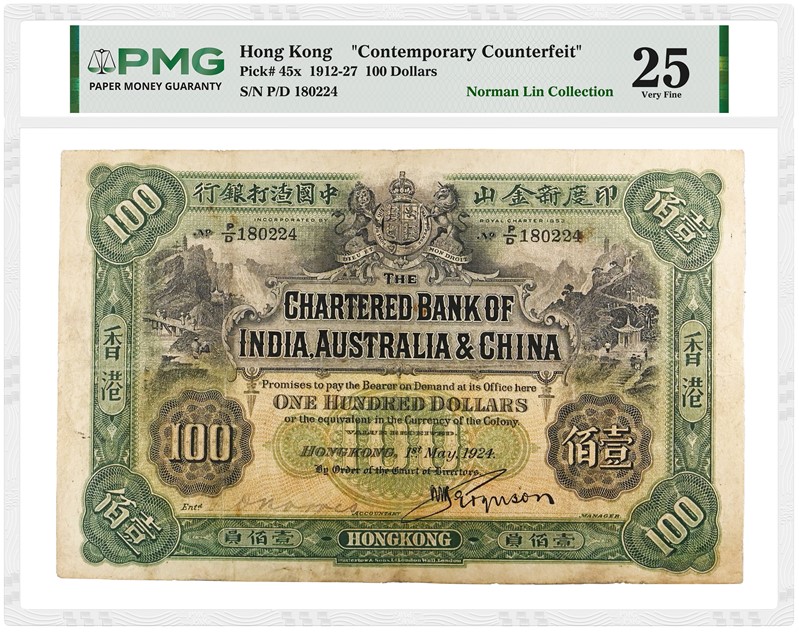
PMG has not graded any genuine issued examples of the 100 Dollars issued by the same bank at this time, but the Contemporary Counterfeit shown below was convincing enough to have circulated to the extent that it did. (At its sole discretion, PMG certifies Contemporary Counterfeits that are of interest to paper money collectors.) It realized $2,340 in a June 2025 Heritage Auctions sale.
The fact that many notes traded hands in Hong Kong a century ago from many different financial institutions created opportunities for counterfeiters. Notice that the design of the 100 Dollars at this time has significant differences from the 10 Dollars.
 | |
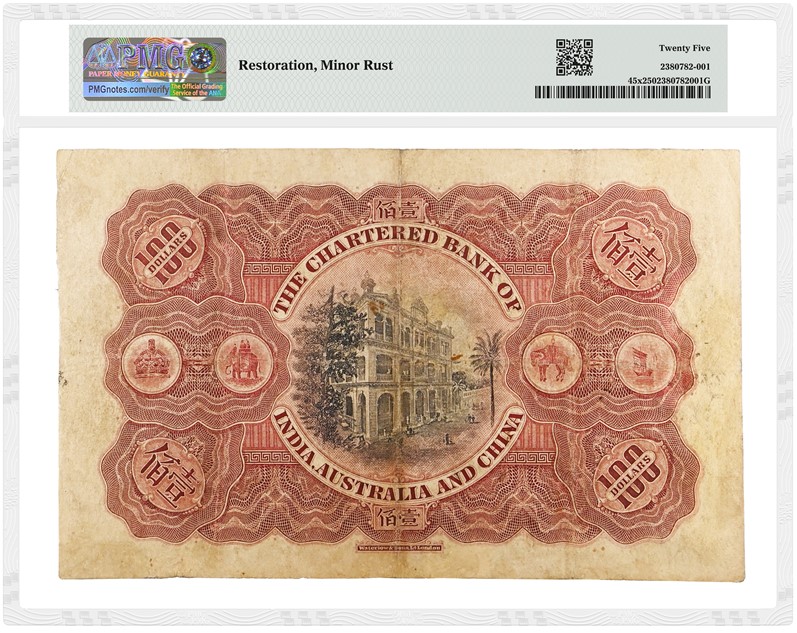 | |
| Contemporary Counterfeit of a Hong Kong 1912-27 100 Dollars, Pick# 45 Click images to enlarge. |
|
The Raised 10 Dollar note has an estimate in the Stack’s Bowers auction of $1,000 to $1,500. A genuine example in a comparable grade is being offered in the previous lot with an estimate of $10,000 to $15,000. This shows that while the modifications that were made decades ago to the Raised note wiped out much of its numismatic value today, there is some that remains, thanks to the rarity of this issue and the interesting story behind it. While this note is easy to identify as Raised, it is always worth keeping in mind the possibility of more-subtle alterations when examining vintage paper money rarities.
Let’s look at one more Raised note, one from the Hartford Bank in the 1860s:
 | |
| Raised Hartford Bank 1860s note. Click images to enlarge. |
|
Under close examination, there are several clues this is a Raised note. Part of the black ink added to change each denomination to 10 covers the small words HARTFORD. Additionally, the word ONE can be seen repeated in the circles that form much of the border, as well as in the dark-green ink beneath the words HARTFORD BANK at the center of the note, pointing to the original denomination.
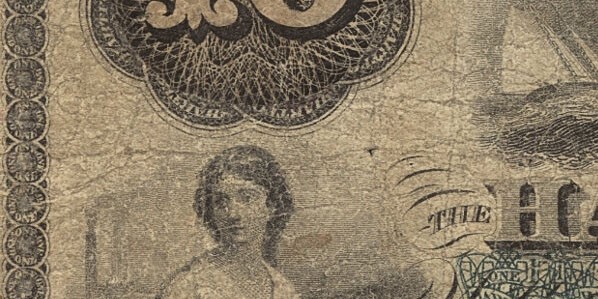 | |
| Close-up of the front of the Hartford Bank note. Click images to enlarge. |
|
Even modern notes can be altered, and we’ll take a look at those in our next column. Remember, PMG backs its determinations of authenticity and grade with the PMG Guarantee.
Stay Informed
Want news like this delivered to your inbox once a month? Subscribe to the free PMG eNewsletter today!