Counterfeit Detection: Timor 1910 1 Pataca
Posted on 2/24/2026
Located at the southern end of Southeast Asia just a few hundred miles from Australia is the island of Timor. Both the Dutch and Portuguese competed for influence on the island. Today, the formerly Dutch portion is part of Indonesia while the formerly Portuguese section is now the country of Timor-Leste.
 | |
 |
|
| Genuine Timor 1910 1 Pataca. Click images to enlarge. |
|
Early in the 20th century, the Banco Nacional Ultramarino introduced notes in the Portuguese colony in denominations of 1, 5, 10 and 20 Patacas (Pick# 1 to 4). Only 21 issued examples of the 1910 1 Pataca note appear in the PMG Population Report, and a note in above-average grade realized $720 through a Stack's Bowers Galleries auction in April 2021.
 | |
 |
|
| Contemporary Counterfeit Timor 1910 1 Pataca. Click images to enlarge. |
|
The initial 1 Pataca design was not replaced until the 1945 series. Counterfeits of the 1 Pataca circulated alongside genuine notes, including this example graded PMG 30 Very Fine, which is being offered (along with several genuine examples) in a Noonans auction this week. The Contemporary Counterfeit has an estimate of £120 to £160, roughy a third of the estimate of a genuine note in the same grade. At its sole discretion, PMG will grade and encapsulate Contemporary Counterfeits that have special interest to the collecting community.
 |
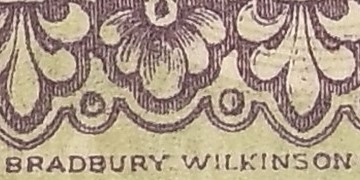 |
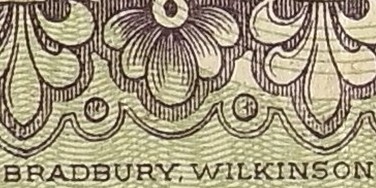
| Close-ups of the front of the genuine (left) and counterfeit (right). Click images to enlarge. |
|
Several clues on the front of the note point to its spurious nature. The banknote printer's name is much rougher on counterfeit, and it looks like the second B in BRADBURY was initially rendered as a D. Note how the inferior printing process on the counterfeit resulted in reduced fine detail. The strokes of the letters are disconnected in places and nearby details are also cruder. For instance, the double lines of the wave above the printer's name almost blend together in places. The comma in each serial number looks like it was added as an afterthought, without leaving any extra space between the first three numbers and the second three numbers.
 |
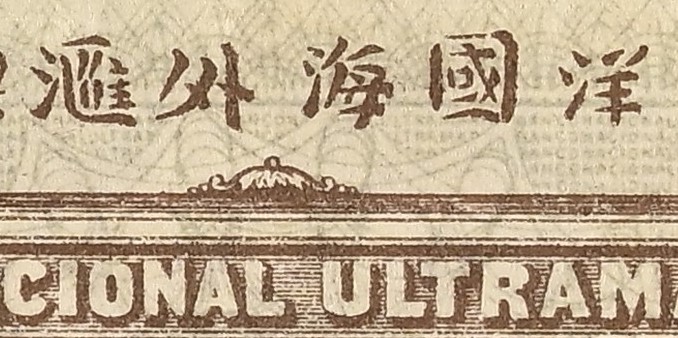 |
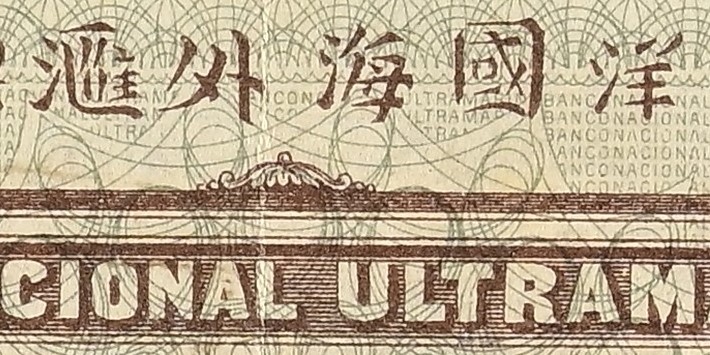
| Close-ups of the back of the genuine (left) and counterfeit (right). Click images to enlarge. |
|
The back of the note also has problems. The variances in the width of the strokes of the Chinese characters are inconsistent with the more-elegant ones found on a genuine note. The design element sitting atop the set of lines beneath the Chinese characters is much cruder on the counterfeit.
There can be significant differences in price between a genuine note and a Contemporary Counterfeit, so it's important to know which one you have. Remember that PMG backs its certification services with the PMG Guarantee of authenticity and grade.