Counterfeit Detection: How Blocks and Watermarks Are Linked in the First Series of People’s Republic of China Notes
Posted on 1/20/2026
By
Jason Hsu
PMG Grader in Shanghai
The three Roman numerals in the blocks of the First Series Renminbi banknotes are not merely symbols; they represent the total issuance volume and the issuance order of each note type. This characteristic often serves as the first line of defense in distinguishing genuine from counterfeit notes.
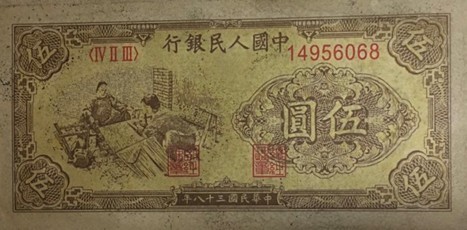
For example, the 5 Yuan "Weaving" note (Pick# 813), an introductory note type of the First Series of Renminbi, was only issued with the first block <I II III>, according to physical verification and historical records. Therefore, if we see a "Weaving" note with a block after <I II III>, such as <IV II III> in the image below, we can easily determine that the banknote is counterfeit.
Similarly, the 100 Yuan "Red Ship" note (Pick# 831) was issued starting with a six-digit serial number, and there are 100 blocks of six-digit serial numbers. If an eight-digit "Red Ship" note has the block <I II III>, or a six-digit "Ship" note has the block <VIII IV VI> (the 101st block), we can also confirm that it is an altered or counterfeit note.
 |
|
| Click image to enlarge. | |
The printing conditions during this unique historical period resulted in numerous varieties of the First Series Renminbi banknotes. For example, different batches of the same note type might have differed in details such as hidden marks, paper, ink and serial number fonts due to resource scarcity or the assistance of other printing plants.
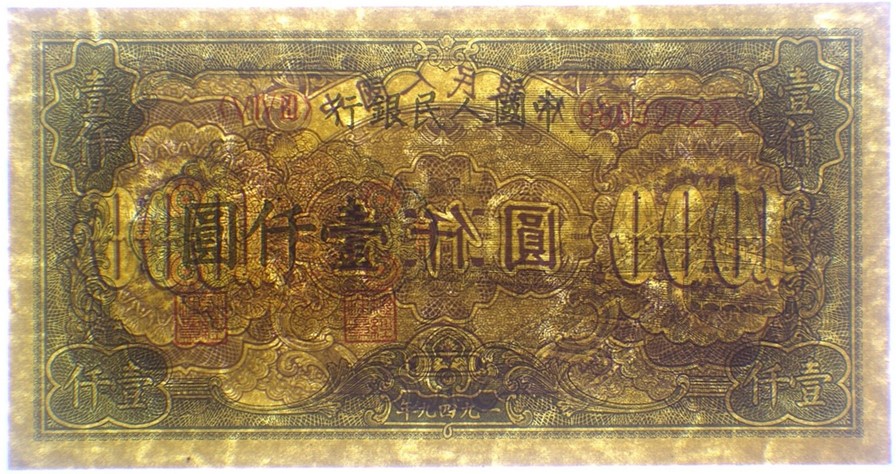
This article analyzes the relationship between the block and watermark varieties of the First Series of Renminbi banknotes and discusses four relatively regular note types: the 100 Yuan banknote featuring plowing and factory (Pick# 808), the 1000 Yuan banknote featuring the Qiantang River Bridge (Pick# 847), the 10,000 Yuan banknote featuring two horses and plowing (Pick# 853), and the 10,000 Yuan banknote featuring a warship (Pick# 854).
Pick# 808a/b – 1949 People's Bank of China 100 Yuan Plowing and Factory - Without Watermark/Stars Watermark
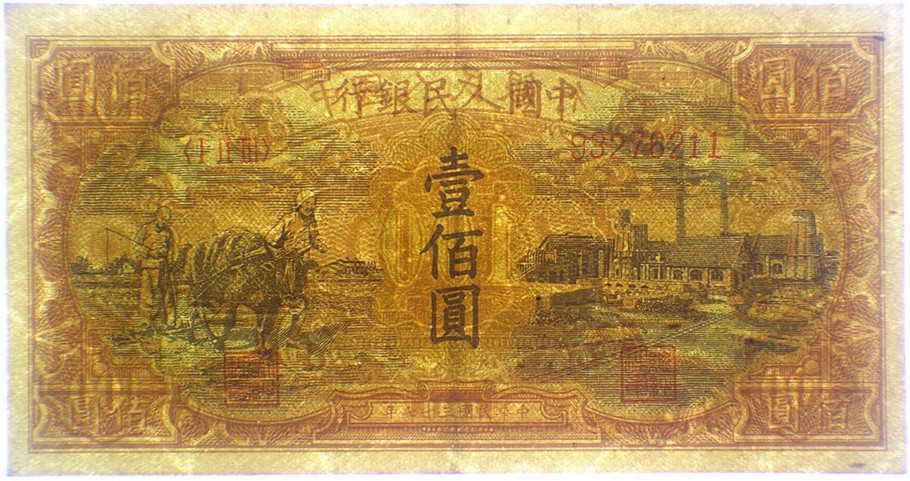
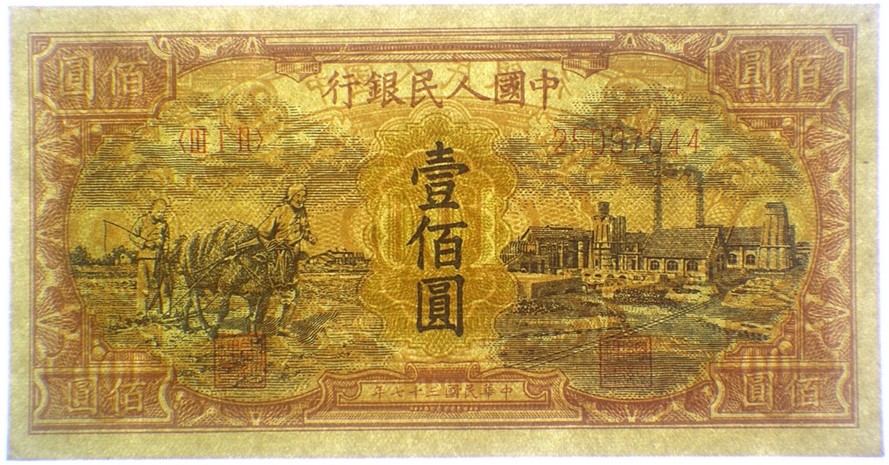
100 Yuan Plowing and Factory was issued with 6 blocks, and the serial number was 8 digits.
- Stars watermark blocks in the order of issuance: <I II III>, <I III II>
 |
|
| Click image to enlarge. | |
- Without watermark blocks in the order of issuance: <II I III>, <II III I>, <III I II>, <III II I>
 |
|
| Click image to enlarge. | |
Pick# 847a/c – 1949 People's Bank of China 1,000 Yuan Qiantang River Bridge, Without Watermark/Stars Watermark
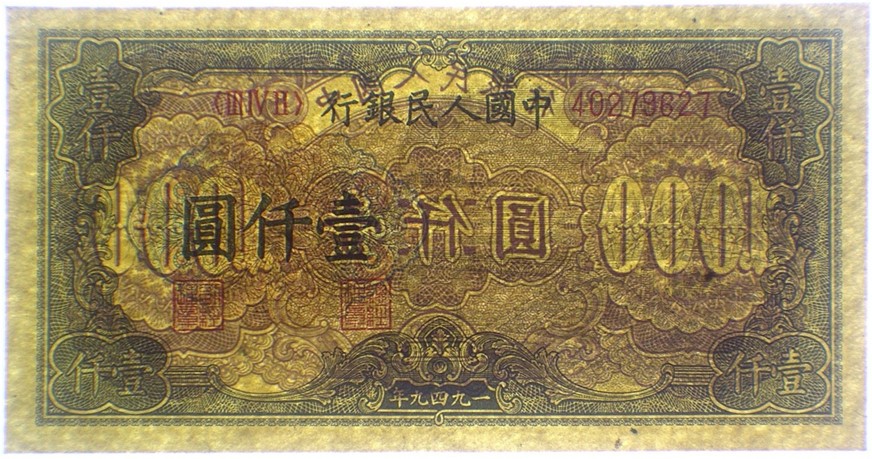
The 1,000 Yuan Qiantang River Bridge was issued with 28 blocks, and the serial number was 8 digits.
- Without watermark blocks in the order of issuance: <I II III>, <I III II>, <II I III>, <II III I>, <III I II>, <III II I>, <II III IV>, <II IV III>, <III II IV>, <III IV II>, <IV II III>, <IV III II>, <III IV V>, <III V IV>, <IV III V>, <IV V III>, <V III IV>, <V IV III>
 |
|
| Click image to enlarge. | |
- Stars watermark blocks in the order of issuance: <IV V VI>, <IV VI V>, <V IV VI>, <V VI IV>, <VI IV V>, <VI V IV>, <V VI VII>, <V VII VI>, <VI V VII>, <VI VIII V>
 |
|
| Click image to enlarge. | |
Pick# 853b/c – 1949 People's Bank of China 10,000 Yuan Note with Double Horse Plowing and Open Star Watermark/Triangles Watermark
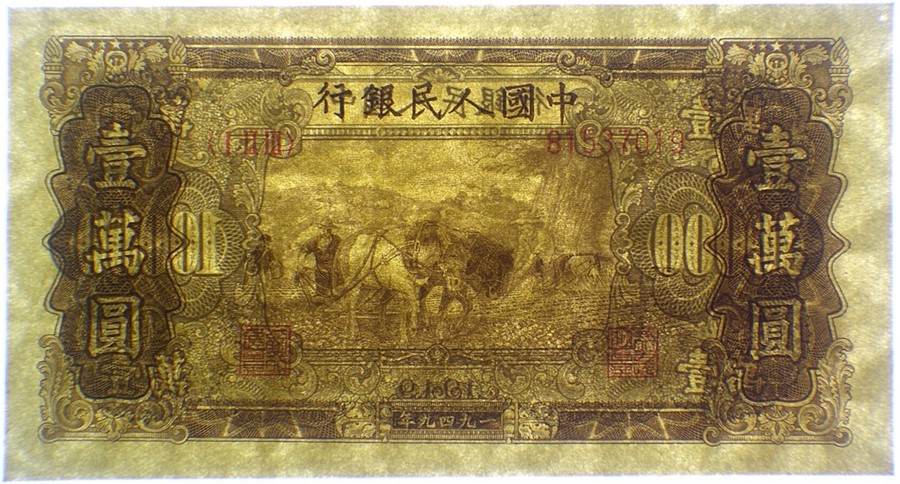
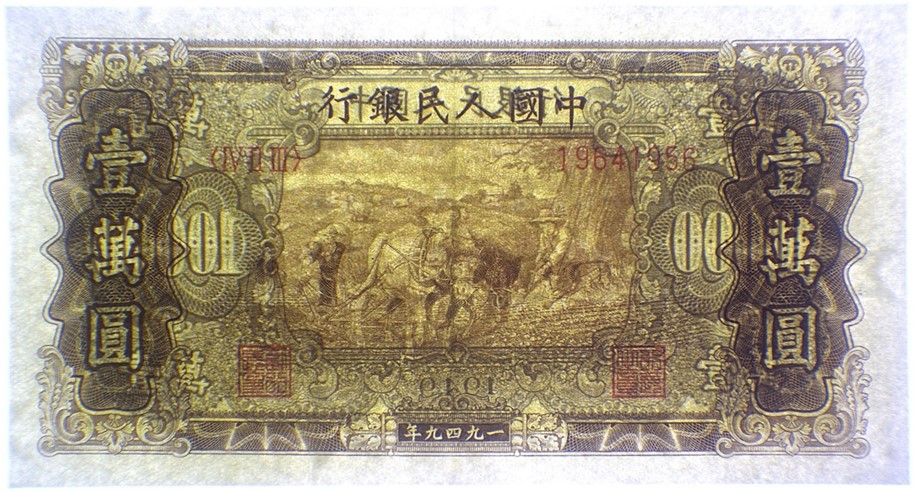
The 10,000 Yuan Double Horse Plowing was issued with 12 blocks plus 1 replacement block, and the serial number was 8 digits.
- Triangles watermark blocks in the order of issuance: <I II III>, <I III II>, <II I III>, <II III I>, <III I II>, <III II I>, <II III IV>, <II IV III>, <III II IV> First digit of serial number 0 - 6
 |
|
| Click image to enlarge. | |
- Open star watermark blocks in the order of issuance: <III II IV> with the first digit 7 to 9, <III IV II>, <IV II III>, <IV III II> and replacement serial numbers <IX VII VI>.
 |
|
| Click image to enlarge. | |
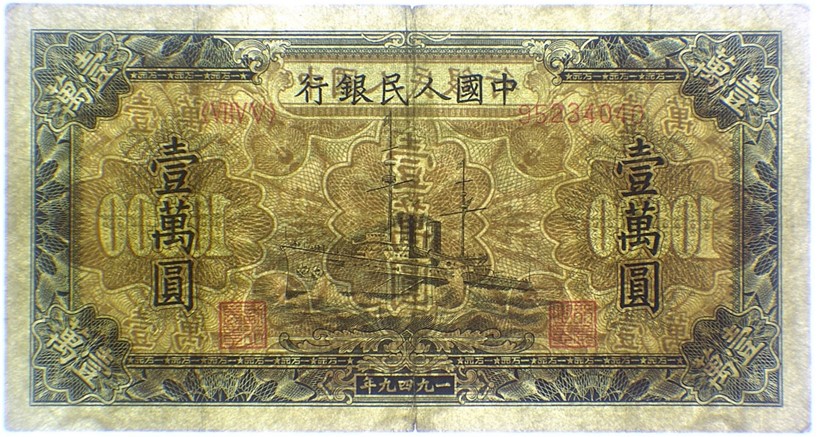
Pick# 854b/c – 1949 People's Bank of China 10,000 Yuan Warship Open Star/Triangles Watermark
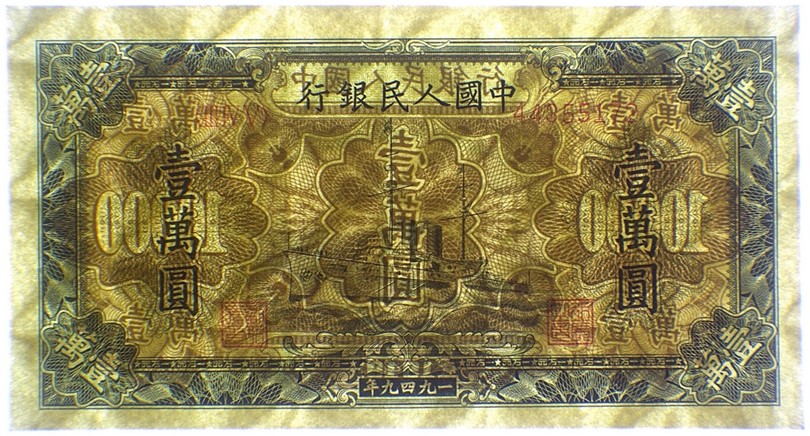
The 10,000 Yuan warship was issued with 25 blocks plus 1 replacement block, and the serial number was 8 digits.
- Triangles watermark blocks in the order of issuance: <I II III>, <I III II>, <II I III>, <II III I>, <III I II>, <III II I>, <II III IV>, <II IV III>, <III II IV>, <III IV II>, <IV II III>, <IV III II>, <III IV V>, <III V IV>, <IV III V>, <IV V III>, <V III IV>, <V IV III>, <IV V VI>, <IV VI V>, <V IV VI>, <V VI IV>
 |
|
| Click image to enlarge. | |
- Open star watermark blocks in the order of issuance: <VI IV V>, <VI V IV>, <V VI VII>, and the replacement number <IX X VII>.
 |
|
| Click image to enlarge. | |
After reviewing the distribution of blocks and watermarks listed above, we can begin to systematically use this information to determine the authenticity and rarity of these note types. For example, when examining a potentially counterfeit 100 Yuan "Plowing and Factory" note, besides comparing the details with genuine notes, knowing that the first two blocks of this variety are stars watermark notes, we can easily identify notes without watermarks with blocks <I II III> and <I III II> as counterfeit.
Furthermore, those familiar with the market know that the 10,000 Yuan "Warship" and "Double Horse Plowing" notes with open star watermarks are significantly more valuable than those with triangles watermarks. Many people may not have understood the reason before, but now, from the distribution of blocks and watermarks, we find that the triangles watermarks account for 88% and 72.5% of the total issuance of "Warship" and "Double Horse Plowing" notes, respectively, while the open star watermarks only account for 12% and 27.5%. This explains why the open star watermarks of these two note types are more sought after by the market and collectors than the triangles watermarks.
Besides these four note types, many other varieties in the First Series Renminbi can be distinguished by their blocks, but many require delving into the first or even the first two digits of the banknote's serial number for accurate identification. For example, the 100 Yuan "Red Ship" and 200 Yuan "Steelmaking" banknotes, although issued in large quantities and priced at entry-level, have the most diverse number of note types due to different hidden markings in the First Series Renminbi. The particularly rare "Red Ship" (Renshen variety) and "Steelmaking" (Dadong variety) fetch significantly higher auction prices and are more sought after by collectors than other varieties.
Additionally, there are the even-more-mysterious replacement notes. How many note types of the First Series Renminbi have had replacement notes discovered to date? And how can we use the blocks to distinguish them? These questions will need to be explored in a future article.