PMG Grading Process
PMG uses a proven, multi-step process that ensures the accuracy, consistency and integrity of its authentication and grading. Here, you can explore the key stages that each note passes through.
Receiving
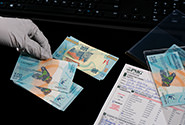
When a submission is received, it is opened by trained PMG staff under security cameras and immediately checked against the submission paperwork. The submission is then entered into PMG's proprietary tracking system with a unique submission number.
Verification and Research
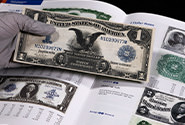
Each note gets a more detailed review to confirm that its description matches the information provided by the submitter. A unique ID and barcode is assigned to track the note throughout the PMG grading process. Most notes are attributed to a reference catalog (such as Friedberg or Pick) by a researcher. At this stage, the note is separated from the submission paperwork so that PMG's graders don't know the submitter's identity, helping to ensure complete impartiality.
Authentication
Each note is stored in PMG's vault until it is ready to be reviewed for authenticity. If the note is determined to be genuine, it will be graded according to the industry-standard PMG Grading Scale. If the note is determined to be counterfeit or altered, it will not be graded.
Attribution
Before grading, a note that was submitted for Variety or Pedigree attribution is examined by specialized numismatists. The note is compared against published references and other materials to determine whether it qualifies as a particular variety of pedigree. If it does, the appropriate descriptions and/or catalog numbers are added to its record.
Grading
Grading is a team effort, with multiple PMG professionals examining every note to ensure accuracy and consistency. PMG's graders enter a grade for each note into PMG's computer system. A consensus is then reached on the final grade of the note.
Encapsulation
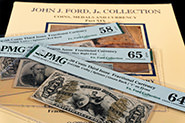
The note is carefully inserted into a high-quality holder along with a secure and attractive label that bears the note's PMG grade, description and unique certification number. Securely sealed on all sides, the PMG holder provides superior optics and preservation for notes.
Quality Control
A Quality Control specialist carefully inspects the note, PMG label and PMG holder. All of the certification details are reviewed for accuracy and the holder is checked for any defects or contaminants.
Imaging
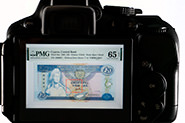
Images are then taken of the encapsulated note for PMG's free online Verify PMG Certification tool, available at PMGnotes.com/verify.
Packaging and Shipping
Finally, the notes are individually counted, barcode-scanned and checked against the original submission form. Notes are then securely packaged in a sturdy cardboard box. The PMG-certified notes are now ready to be sent back to the submitter.